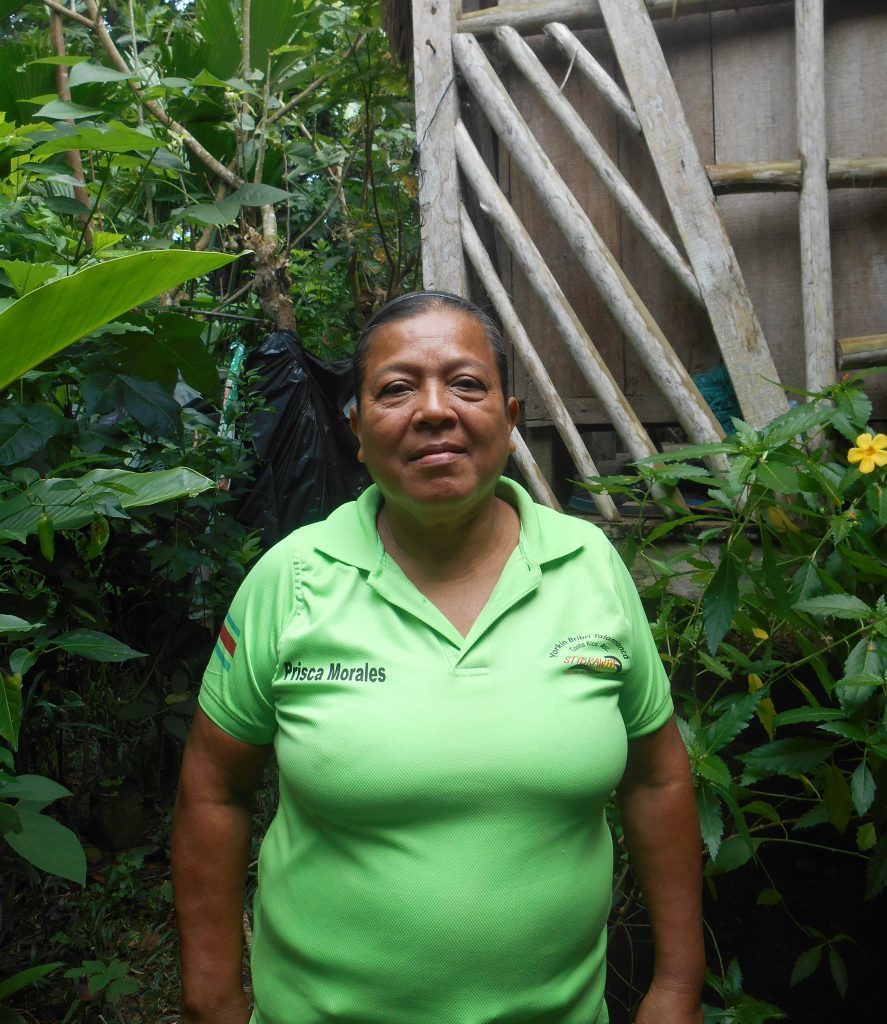
| Prisca Morales Rodriguez, 2024. Mother of 8 children, Daughter to Inocencio Morales Morales y Fabiana Nelson Rodriguez. Secretary and work-member of STIBRAWPA.
Quotes from Prisca:
“Sabíamos que el verano en un mes iba a ser. En un mes sabíamos cuál es el verano y otro mes sabemos cuándo es la lluvia. Se sabía bien. Pero con el pasar de los años, vemos el cambio” | “We knew that summer would come in a [certain] month. In any month, we knew when it was summer and when it would rain. We knew it well. But with the passing of the years, we see the change.” (Essay I | Climate Experiences, para. 2)
“[Cuando] viene el sol en la mañana, viene la lluvia, con lo caliente y lo frío hay un choque, las matas se ponen amarillas, incluso algunos se mueren porque no soportan la calor con lo frío o lo frío con la calor. Y eso es con todas las plantas. Y si en banano es lo mismo, si hay una planta y tal vez está cerca de una humedad, lo caliente con lo frío, eso lo deja que muera. Y usted con el tiempo ve que las hojas se ponen como amarillas, es por el cambio climático.” | “[when] the sun comes in the morning, then comes the rain, with the heat and the cold there is a choking, the leaves turn yellow, some even die because they aren’t supported by the heat with the cold or the cold with the heat. And this is with all of the plants. With the banana it is the same, if there is a plant and maybe its close to a humid zone, the heat with the cold, this leaves it for dead. And in your time you’ll see that the leaves are turning yellow, its because of the changing climate.” (Essay I | Climate Experiences, para. 4)
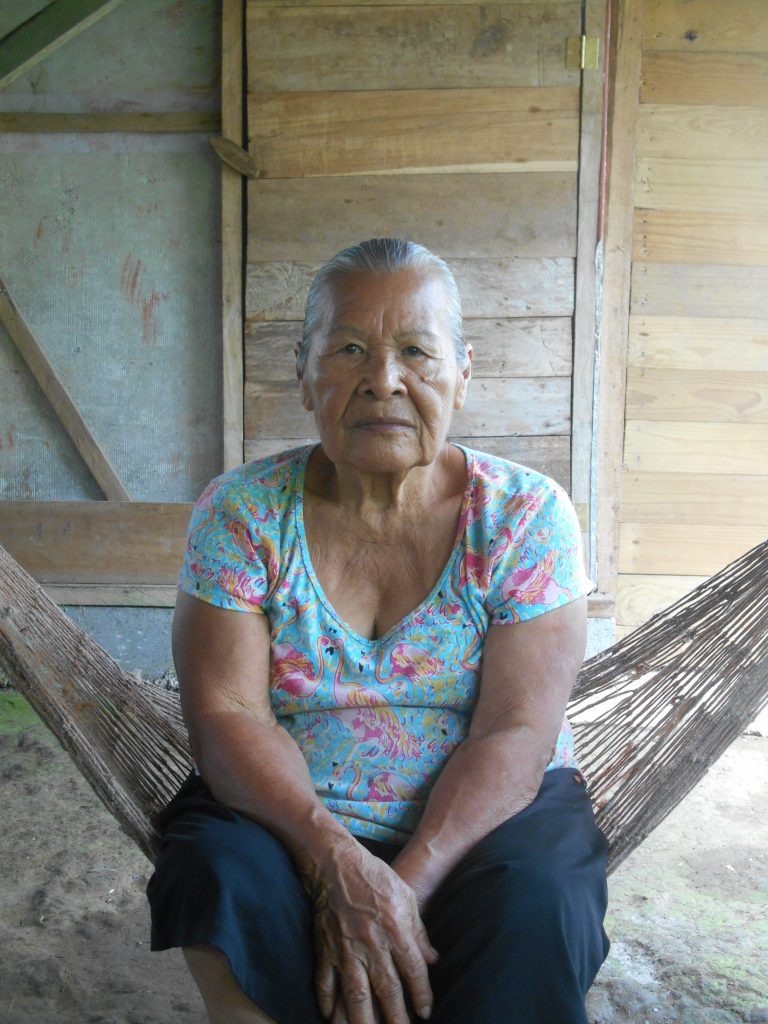
Morales, Daughter to Julian Valdez Valdez and Soila Morales Morales. Long-standing Yorkin resident and memory holder.
Quotes from Dominga:
“Un cambio distinto, como que yo digo que el sol se bajó, no sé qué pasó, pero dicen que es el cambio climático que dicen ahora está diferente. Yo digo que la naturaleza está como distorsionada. Ahora usted espera sol, es lluvia. Cuando usted espera lluvia, es sol. Todo está diferente.” | “A distinct change, I say its like the sun lowered, I don’t know what happened, but they say that it is [because of] climate change that now its different. I say that nature is distorted. Now, when you wait for sun, it rains. When you wait for rain, there’s sun. Everything is different.” (Essay I | Climate Experiences, para. 2)
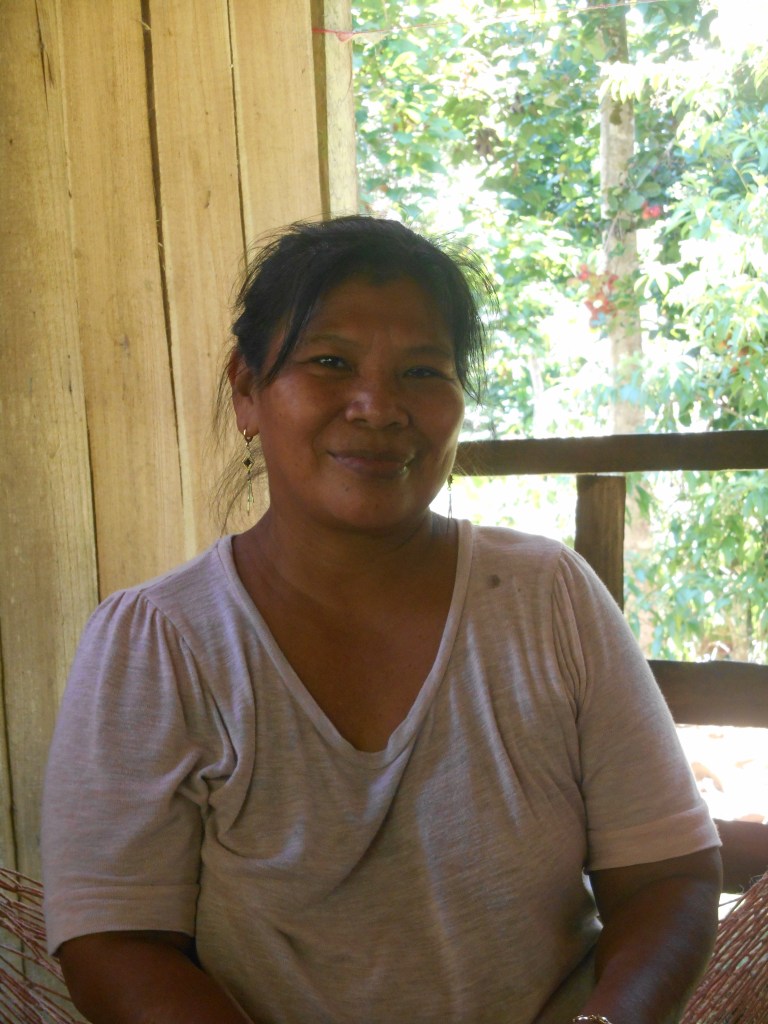
Quotes from Mirian:
“Anteriormente habían muchos animales, aunque hoy en día no se. No se ve muchos animales. ¿Qué pasó? No sé, tal vez están más arriba en la montaña, porque allá arriba tenemos el parque cerquita, el parque internacional que tenemos entre Panamá y Costa Rica. Ahí se ve bonita. Entonces en ese parque hay de todos animales. ¿Entonces como nosotros estamos acá, para qué van a venir? Si ahí tienen esta gran casa de ellos.” | “There were many animals before, but today I don’t know. You don’t see many animals. What happened? I don’t know, maybe they are higher in the mountain, because up there we have the park nearby, the international park between Panama and Costa Rica. Up there is it so beautiful. In that park there are all types of animals. So if we’re down here, why would they come? If up there they have their grand house.” (Essay I | Climate Experiences, para. 7)
“My papa is 77 years old, and when we were kids, my father would harvest all of the food for us. The only things he would buy were the soap, the camfin (for light) and salt. So my papa harvested everything, and he did it in large amounts: for the year. The next year he’d return to plant again. It was rice, corn and beans, the most that he planted. They were the three that we couldn’t lack in the house. Corn, rice and beans. But, now that we are in this year, 20 years ago, we started to see the problem that we had, because the rice that we harvested would sometimes seed. When the rice was like this (crooked) or it could be like this (other crooked), already painful to harvest, then the rain would come. And the rain would fall hard, so hard on the rice, and the rice would fall off. And when the rice falls, now you can’t harvest it. All of the seeds are going to be damaged. So depending on the luck of one’s run, if your rice is in the middle of that, you lose it. And with the corn is the same. The corn is bigger, the earth softens, and ravines sometimes form. The stock falls, all of it falls. Now you haven’t harvested anything. After, we have the bean that is the most delicate with the rain. The beans we harvest in March, and March was a month of pure sol. Now where we are, there are March’s that rain hard , and sometimes we are in a painful harvest. You know that we work with our hands, we don’t have machines or anything, so one goes one day, and you gather your harvest and if tomorrow the rain comes, to pain your beans. We can’t calculate if we are going to have a good harvest. Today it is what it is, to not lose our culture, we do a small amount to see if we can gather anything. Last year we planted beans, and we had to eat them germinated because the rain fell and they quickly germinated. We had to eat them like this to not lose them. And how are you going to save this? You can’t save this. And this is a month that definitely was a month for harvest, a month like March where there used to be a lot of sun. But the rain fell, and so there isn’t a fixed day like before that you can calculate. March is going to see sun, it’s not going to rain, that’s the day to harvest. Before, my father had all this, he knew in March there’d be sun, you had to harvest these, in August there are other varieties you have to harvest. Back then, there was no loss.” (Climate Experiences, Audio Excerpt and Translation)
“Nosotros somos un territorio grande. Esta parte acá abajo son maestros, trabajan con el gobierno, trabajan en turismo, pero los que están aquí en la parte alto dependen de eso, el arroz, maíz, frijoles. Aquí cerca de nosotros tengo un primo que vive aquí como hora y media allá arriba. Y él no vende cacao, no vende banano, no hace turismo, nada. Él tiene arroz y viene aquí, vende su arroz a alguien que quiere y compra su sal, compra su aceite o lo que ocupa y vuelta se va. Así como él, hay muchas personas hacia arriba que no venden. No, no se, me pongo a ver de que comen? A veces yo digo que ustedes venden aquí cuando? Dice que ‘nosotros no vendemos, nosotros cosechamos arroz, cosechamos maíz, frijoles y tenemos las gallinas. Y si queremos dinero, agarramos un cerdo y lo matamos, vendemos la carne y compramos lo que necesitamos.’ O sea, ellos no están pensando en dinero, ellos están pensando en tener su comida simplemente por eso.” | “We are a large territory. This part down here (Yorkin) has teachers, people who work with the government, people who work in tourism. But those who live higher here in the mountain depend on this, the rice, corn, beans. Here close to us I have a cousin who lives about an hour and a half up. And he doesn’t sell cacao, he doesn’t sell banana, he doesn’t work in tourism, nothing. He grows rice and he comes here, sells his rice to anyone who wants it and uses the money to buy salt, to buy oil, or whatever he needs and returns home. Like him, there are many people living up the mountain that don’t sell. I, I don’t know, it makes me wonder what they eat. Sometimes I ask them when they sell here, they say “No, we don’t sell, we harvest rice, we harvest corn, beans and we have the chickens. And if we need money, we grab a pig and kill it, we sell the meat and we buy what we need.’ This is to say, they aren’t thinking in terms of money, they’re thinking about having food, simply put.”
“Lo que ocupamos nosotros para la felicidad es la salud. Porque nadie quiere estar enfermo, queremos estar bien para hacer nuestro trabajo, para nosotros hacer lo que queremos, para tener nuestra comida, para criar nuestros hijos. Esa es la felicidad para nosotros. Ellos creen que tal vez nosotros sin dinero estamos tristes. Nosotros lo único que uno se pone triste es cuando alguien está enfermo, pero mientras tenemos salud, tenemos la comida. Y eso es lo que yo quiero que la mayoría de nuestra gente entiendan, porque como le digo, la parte de aquí ya se acostumbraron con el dinero, no pueden estar sin dinero. La parte de aquí, en la parte alta de Talamanca dedican el tiempo a estos trabajos, ellos no les interesa el dinero. Ellos viven felices, nosotros pues vivimos, vivimos felices con la tierra, por la naturaleza, con la comida que Dios le da a uno.” | “What we need to be happy is good health. Because nobody wants to be sick, we want to feel good so that we can do our work, so that we can do what we want to do, eat our food, take care of our children. This is happiness for us. They think that maybe we’re sad without money. The only thing that makes us sad is when someone is sick, but when we are healthy, we have our food. And this is what I want the majority of our people to understand, like I said before, the people down here (in Yorkin) are already accustomed to having money, they can’t be without money. The part up here, in the higher regions of Talmanca, dedicate themselves to this work, they aren’t interested in money. They live happily, we, well, we live happily with the land, with nature, with the food that God gives us.”
Sophia: “Y usted se siente en la mitad de los dos partes de la montaña, porque usted trabaja con STIBRAWPA, pero usted no ocupa dinero para comprar muchas cosas, solo para vivir.” | “And do you feel in the middle of these two parts of the mountain? Because you work with STIBRAWPA, but you don’t need money to buy many things, only to live.”
“No necesito mucho dinero para comprar cosas, pero sí necesitamos para trabajar. Por ejemplo, para cosechar el arroz yo tengo que llevar a alguien que me ayude y tengo que pagarle, porque yo [solo] cómo puedo, entonces por lo menos le doy un dinero. Entonces yo necesito la plata para ayudar al medio ambiente, para que las personas no tengan que tal vez buscar plata otro lado. Y no sólo con el arroz, con el cacao, porque hay que sembrar más cacao, que hay que chapear el cacao, que hay que cosechar el cacao. Entonces como ya somos dos nada más, ya mis hijos se fueron, necesito alguien que me ayude. Entonces el dinero que yo garro, yo necesito es para ayudar, trabajar en mis fincas, trabajar mis cosas, no para comprar cosas, que no es necesario eso.” | “I don’t need much money to buy things, but I do need money to work. For example, to harvest the rice, I have to bring someone to help me and I have to pay them, because how could I do it alone? So at the very least, I give a little money. So I need money to help the environment, so that the people I pay don’t try to look for money in other (extractive) ways. And not just with the rice, but also the cacao, because we always need to plant more cacao, trim the cacao, and harvest the cacao. And here we are just two, my children have already moved out, I need someone to help me. So the money that I earn, I need it to pay for help, for those who work on my farm, not to buy things, that isn’t necessary for me.” (Transformed Food Futures, para. 11)
“Dios no nos dejó machete, no nos dejó lápiz, no nos dejó cuaderno, nada, simplemente lo que era la naturaleza. Entonces nosotros no sembrabamos, nosotros cosechamos las cosas que ya habían en el bosque, como plantas que se pueden comer, como flores que se pueden comer, como raíces que se pueden comer, hongos que se pueden comer, animales, aves, pescados. Todo eso se hacía con la mano sin ningún tipo de herramientas que uno pueda decir que es hecho por el hombre, sino cosas que nosotros usamos de la naturaleza, materiales de la naturaleza. Por ejemplo, la lanza era de un tronco que uno lo fabricaba de la misma naturaleza, un tronco más que todo se usaba la palma de gira para hacer los arcos, los arpones para matar animales, entonces eso y se usaban fibras que nosotros sabemos sacar de los árboles para ponerle al arco. Entonces no había que comprar nada, todo estaba ahí.” | “God didn’t leave us the machete, he didn’t leave us pencils, he didn’t leave us notebooks, nothing. Simply what was in nature. So we didn’t plant food, we harvested the food that was already in the forest, like plants you can eat, flowers you can eat, roots/tubers you can eat, mushrooms you can eat, animals, birds, fish. All of this you could do with your hand, without any tools that one could say was man made, just items from nature, materials from nature. For example, the spear was made from the trunk of a tree, fabricated from nature, a trunk that most often was a palm tree to make bows and harpoons to kill animals. They used fibers that we know to get from the trees to make the bows. So there was no need to buy anything, everything was already there.” (Transformed Food Futures, para. 17)
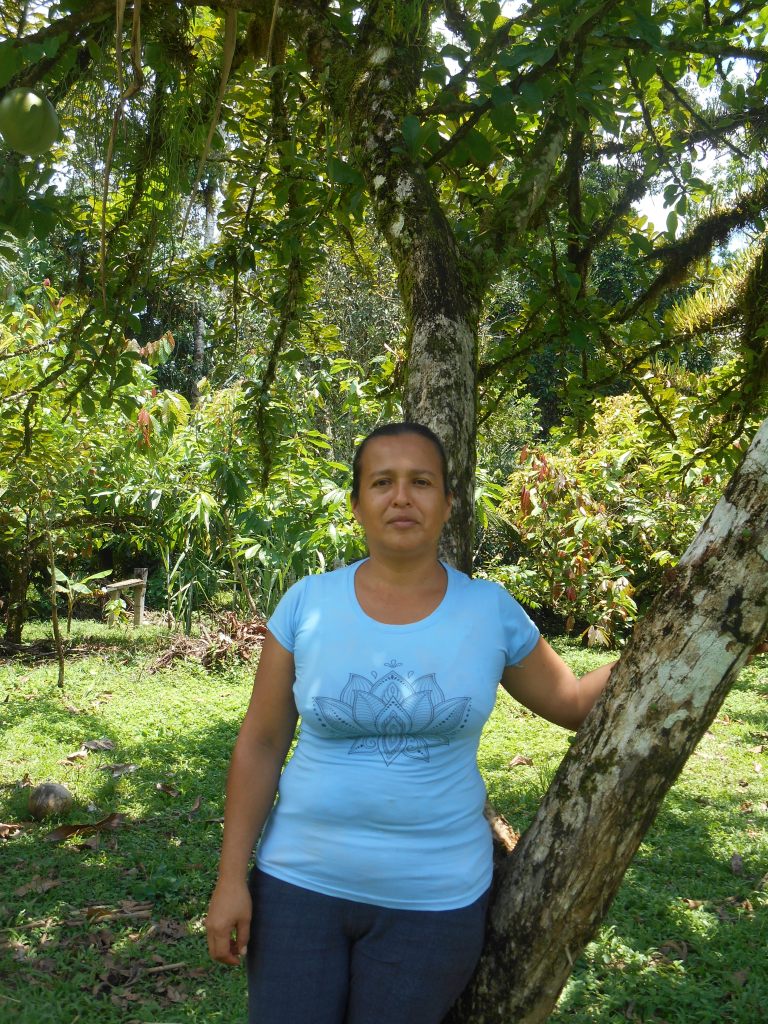
Quotes from Saolin:
“Aquí hubo una inundación muy grande, hace unos años que esa inundación fue como en el 2008, 2009, que quedó todo devastado, los ríos arrasaron con todos árboles y todo eso fue aquí en la plaza, usted ve la casa que está aquí en la Palma, el río llegó a la pata de esa casa, usted se paraba y no quedó árbol por la ribera del río. Y en ese tiempo ninguna organización vino a ver aquí qué pasó con el río y ahí salió STIBRAWPA, ya existía para ese tiempo, se dedicó a sembrar árboles otra vez por toda la ribera del río.” | “There was a very large flood here, its been some years since this flood came, it was in 2008 or 2009. It left everything devastated, the rivers ravaged all of the trees and all of this came here to the plaza. You see the house here where the palm tree is, the river came to the footsteps of this house. No trees were left on the riverbanks of the rivers. And in this time not a single organization came to see what happened here with the river, but in came STIBRAWPA, it already existed in this time, and they dedicated themselves to planting trees again all along the riverbank.” (Essay I | Climate Experiences, para. 6)
“El sistema de nosotros de cultivar es integral, es un cultivo enfocado, nosotros nos enfocamos en poder obtener lo que necesitamos en la finca. Entonces no nos dedicamos solamente a una cosa, nosotros necesitamos por ejemplo madera para las casas, entonces la madera debe estar en la finca, se debe conservar. Entonces por eso es que en la finca se va a encontrar laurel, se va a encontrar cedro, se va a encontrar diferentes árboles de madera que generalmente está en la montaña, pero también los sembramos en las fincas para que poder tenerlo. Entonces nosotros necesitamos también el cacao, que es nuestra bebida tradicional, también debe estar en la finca. Entonces el cacao se siembra en más cantidad, porque además de ser nuestra bebida, pues también se comercializa. Entonces en la finca va a haber bananos, variedad de bananos, va a haber plátanos y también lo que son raíces que son como la yuca, el ñame, ñampí, todo eso va a estar en la finca. Nosotros también ocupamos frutas y todas las frutas de la finca, vas a encontrar naranjas, limones, limón dulce, mandarina, cas, carambolas, todo eso está en la finca. También en la finca, hay pipas, cocos para la cocina, para comer, para los animales. También plantas medicinales, ahí tenemos jengibre, cúrcuma y las plantas medicinales naturales que de la zona que nacen, que no se cultivan, sino que nacen solas, todo eso lo tenemos de la finca. Entonces la finca, por eso es que te digo que es integral, porque en la finca se trata de tener todo lo que usted necesita. Entonces, así es como se ha trabajado. Ahora, en lo que es la tierra, se trabaja natural. ¿Por qué? Porque las mismas hojas, lo mismo que cae de la finca es el abono de la tierra. Entonces es una tierra que siempre es productiva, no es una tierra que pierde todos sus nutrientes. No, claro. ¿Verdad? Con todo esto del cambio se ha dañado y ha sufrido. Es que no. Pero la tierra que se mantiene con este sistema es una tierra que es productiva, que si usted siembra probablemente va a cosechar. Mientras que una tierra que se hace monocultivo, una sola planta, se usa químico, es una tierra que se vuelve árida.” | “Our cultivation system is integral, it’s a focused cultivation. We focus on obtaining whatever we need from the farm. So we don’t dedicate ourselves to just one thing, we need for example wood for the houses, so the timber should be in the farm, we should conserve it. So in our farms you can find Laurel, you’re going to find Cedar, you’re going to find different timber trees that are generally in the mountains, but we plant it here in the farms as well so that we can have it near. So we also need to grow cacao, as this is our traditional drink, it should also be in the farm. So the cacao we plant in larger quantities, because in addition to being our drink, it is also a commercial product. So in the farm you’re going to have banana, many varieties of banana, you’re going to have plantain, and also the roots like yucca, yam, and ñampi (local tuber variety), all of this is going to be in the farm. We also need fruits, and all of our fruits can be found in the farm, you’re going to find oranges, lemons, sweet lemons, mandarins, cas (Costa Rican guava), starfruit, all of this is in the farm. Also in the farm are coconuts, for the kitchen, to eat, for the animals. Also medicinal plants, there we have ginger, turmeric, and the medicinal plants that grow naturally in this zone, that don’t need to be cultivated, because they grow on their own, all of this we have on the farm. So the farm, this is why we call it integral, because the farm tries to have everything that you need. So, this is how it works. Now, in what is the land, we work naturally (organically). Why? Because the same leaves, the same ones that fall on the ground are the fertilizer of the soil, it works naturally. Of course, right? With all this change maybe its suffering, but no. The land that maintains itself with this system is a productive land, if you plant something in this, you will likely harvest it. Meanwhile, land used to grow monoculture, only one plant, uses chemical fertilizers, and that land becomes barren.” (Transformed Food Futures, para. 9)
Sophia: ¿Y la mayoría de la gente aquí en Yorkin tratan a las fincas así? | And the majority of the people here in Yorkin treat their farms like this?
“Sí, a excepción de los que se han metido en plátano. Generalmente el plátano usted lo va a encontrar a esa orilla del río y es por lo mismo, porque el plátano arrasa con todo. Pero el plátano con químico, porque el plátano natural no hay problema, usted lo cosecha entre la finca. El plátano con químico es que se quita todo árbol, es a pleno sol. Entonces los que donde hay plátano no vas a ver esos niveles, porque solo hay plátano.” | “Yes, with the exception of those who work in plantains. In general, the will find plantain on that side of the river and it is for a reason, because that plantain ruins everything. But the plantain with chemicals, because the natural plantain, there are no problems, you can harvest it within the farm. The plantain treated with chemicals eliminates every other type of tree, and sits in full sun. So where the monoculture plantain grows, you will not see those three tiers (of the integral farm), because there is only plantain.”
Sophia: “¿Y la gente que cosechan el puro plátano viven aquí en Yorkin? | And the people who harvest the monoculture plantain live here in Yorkin?”
“Mhm (si)” | “Yes”
Sophia: “¿Y hay alguna distinción entre las personas que crecen sus fincas así y las personas que crecen sus fincas así?” | “And is there any diction between the people who grow their farms like this (integrally) and the people who grow their farms like that (monocultural)?”
“Yo pienso que la diferencia está en que, al menos yo puedo decir que uno trae esto ya como conciencia de tu enseñanza, los abuelos transmitieron esa enseñanza a mi mamá, mi mamá la ha conservado, mi mamá me pasó esa enseñanza a mí, yo la he conservado, ahora yo estoy tratando de pasársela a mis hijos para que puedan seguir conservando y teniendo lo natural. Pero esto es una cuestión de que hay de transmitir, de transmisión, porque es la forma del sistema del indígena, puede transmitir el conocimiento o el estilo de vida. Pero no sé si igual ya te hablaron de esta parte igual y hablemos de cómo invasión, digamos invasión, han venido otros que han hecho estos sistemas, entonces ya algunos dicen le ha gustado ese sistema por el comercio, por la economía, digamos que se negocia, entonces se fueron involucrando otros. Ahora, también tiene que ver que no toda la población de Yorkin está con esa ideología de conservar, de cuidar.” | “I think that the difference is in, at least I can say that one comes with this, like, the consciousness of your teachings. My grandparents transmitted this knowledge to my mother, and my mother conserved it, and passed it down to me. Now I conserve it, and now I’m trying to pass it along to my sons so that they can continue conserving and tending [the farm] naturally. But this is a question of transmission, because it is the form of our Indigenous system, it can transfer the knowledge or the style of our lives. But I don’t know if I already spoke with you about this part, if we’ve already talked about this, like, invasion. Not invasion, but other people have come and made these other systems, and some have decided that they like these other systems better, for the commercial opportunity, from an economical point of view, so they negotiated, and some people became involved in it. So, it’s also important to remember that not all of the people in Yorkin are with this ideology of conserving, of taking care [of nature].” (Transformed Food Futures, Audio Excerpt and Transcription)

Quotes from Bernarda:
“La lluvia no era lo de hoy, la lluvia de antes era como sereno, no era como gotas. Entonces nuestras casas resistía eso, las casas de hojas de la suita hoy no resisten el 20 años duraba una casa para moverle la suita, hoy solo 8 años se tiene que moverlo porque ya le entra agua, porque la gota de la lluvia es muy pesado y lo rompe.” | “Today the rain is not what it used to be, the rain before was serene, not like large droplets. So our houses were able to resist this, our houses of leaves today cannot resist the 20 years they used to. Today they only last 8 years before you have to move them because already they let water enter, because the droplets of the rain are so heavy and they break the roofs.” (Essay I | Climate Experiences, para. 5)
“[Antes, yo] vi animales por montones, aves por montones. Ahora ya no se ve muchas aves, porque? porque llueve demasiado. Tal vez a la hora que ellos van a reproducirse tal vez cuando están en huevos como las aves, entonces se pudren, ya no nacen. ¿Por qué? Porque hoy llueve a la hora que le entra la gana de llover. El día que las aves están poniendo [huevos], no hay lluvia seca. Por ejemplo en Marzo o en Abril más o menos están las aves ya naciendo. Ahora no, en Marzo llueve una lluvia y se pierden los huevos de los animales.” | “Before, I would see animals for miles, birds for miles. Now you don’t see many birds, why? Because it rains too much. It could be that during their reproduction time, when the birds have laid their eggs, they don’t hatch. Why? Because today it rains like no other rain. The day that the birds are laying their eggs there is no longer dry(calm) rain. For example in March or April more or less the birds are already hatching. Now no, in March it rains so hard and we are losing the eggs of the animals.” (Essay I | Climate Experiences, para. 8)
“El machismo anteriormente era que las mujeres no podíamos tener estudios, las mujeres eran de la casa, de la cocina. Las mujeres no tienen que estudiar. Y sí iban a estudiar son vagas, no eran mujeres para los hombres. Ellos no querian eso. A los papas, ellos no veían a la mujer estudiando, la mujer, la cocina y eso nada más. Cuidar a los niños, eso sí es un trabajo. Pero estudiar, ver, estar en una organización, emprendiendo las mujeres, eso no era de ellos. Ellos veían que eso no era, eso pasar el tiempo, perder tiempo. Para los hombres que tienen que estar en la casa. Segundo que ellos son los que mandan, no las mujeres. Y después que te mandan usted es como, usted es de él, él que lo mueve donde usted quiere, no usted quiere. Eso era así y tan fuerte, tan fuerte que era ese machismo que yo, cuando empecé la organización, eso fue muy difícil para mí, muy difícil. Tuve que cambiar la mentalidad de los hombres y de los jóvenes de que eso no era lo mejor. Y que en nuestra cultura no existe eso. Todo el mundo dice, gente más, dice no, es una cultura existió, pues no existió porque? Vamos a la historia, vamos a la historia y convenza me con la historia, lo que dice la historia. La historia me dice a mí que no hubo machismo y hubo mucho respeto. Eso sí. que hubo, Cuando las mujeres iban a trabajar, iban a hacer la tierra, eso de, como se dice, la jala de piedra para las máquinas que para como el chocolate y todo eso. ¿Quien guiaba el hilo, quien lo guiaba? Las mujeres! No eran solo los hombres, era un conjunto, no era porque no servía para nada. Ellos, ellos decían que esto, ustedes pueden guiarnos el hilo, porque ellos cargando el hombro aquí cada las piedras, ellos no pueden ver allá, pero las mujeres si, y sostienen el mecate para que los hombres no sientan el peso. Entonces las mujeres iban adelante sosteniendo ese mecate. No hubo machismo en nuestra historia. Dice que nosotros somos matrilineal, somos la jefa del clan, nosotros somos los herederos del clan. No dice que los hombres porque hizo ustedes que existieron machismo, no es cierto. Dios cuando dejó la tierra dijo que la tierra era como quien? como la madre de la tierra, como la mamá de nosotros, que nos da de mamá, nos crece y morimos y él nos recibe así es la madre y dio un nombre a eso, como lo dio el nombre, como se llama? Se llama Iriria, que quiere decir Iríria? Iriria es una mujer. Dio un gran ejemplo de que nosotros somos como la madre. Hasta el mismo Dios respetaba eso, el respetó eso y puso así la mamá, el mar, el mar es más grande que la tierra y que dios, que dijo el Dios que el mar se llamará Daye, una mujer, el que va a mandar en este momento, el que manda en este momento es una madre, es una mujer. Entonces porque ustedes me dicen así, yo tuve que convencerlo porque ellos decían lo que como uno es joven, ellos pensaban que nos iba a engañar, porque uno es joven no conoce y en ese tiempo yo no conocí la historia, pero yo me metí a conocer las historias y me di cuenta todo eso, que había una gran importancia de las mujeres y porque hoy los hombres no dicen que nosotros no valemos, nosotros tenemos que estar solo haciendo esto y ellos sí tienen el derecho de hacer lo que quieren y menos nosotros. no puede ser así. Entonces que hoy día los españoles digan que ellos están poniendo derechos de igualdad, eso ya existía en nuestra cultura, la igualdad existía. | “The sexism before was that the women could not study, they were women of the house, of the kitchen, the women didn’t need to study. And if they did go off to study, they were lazy, they weren’t good women for the men. The men didn’t want that . The parents, they had never seen women studying, the women, the kitchen, and that was it. Take care of the kids, this is also a job. But study, be a part of an organization, learn about business, this wasn’t for the women. They saw it as a waste of time, the men believed the women needed to stay in the house. The second aspect is that the men were the ones who were in charge, not the women. And after they were in charge, you were his, he could move you where you wanted, where you didnt want. This was so strong, so strong this sexism that I, when I started the organization, it was very hard for me, very hard. I had to change the mentality of the men and of the children that this wasn’t for the best. And that in our culture, this didn’t exist before. How did it not exist? Lets go to the history, look at the history and convince me with the history, what does it say? The history tells me that there was no sexism and that there was much respect. This, yes. That there was, when the women came to work, came to work the land, with the, what’s it called, the stone pull for the machines that make the chocolate and all that, who guided the thread, who guided it? The women! It wasn’t just the men, it was a combined effort, it wasn’t because it was useless. They said that you can guide the thread, because they were carrying the stone on their shoulders, they couldn’t see there, but the women could, and they supported the rope so that the men would feel the weight less. So the women went ahead supporting the rope. There wasn’t sexism in our history. He (God) says we are matrilineal, that we are the head of our clans, we are the heirs of our clans. He doesn’t say the men because the men created machismo, and that was true. When God created Earth, he said that the Earth was like what? Like the mother of the earth, the mother of us, we grow and we die and he receives us just like a mother, and he gave Earth a name, what was her name? Her name is Iriria, what does Iriria mean? Iriria is a woman. God gave a grand example of who we are as mothers. God respected this, he respected it and he put, just like the mother, the ocean, the ocean is larger than all of the land on Earth, and what did God say? He said that the ocean would be called Daye, a woman, He who is in charge at this moment [decided this]. She is a mother, a woman. So why did they tell me this? I had to convince them because they said, because when someone is young, they are going to be decieving, and at this time I didn’t know our history, but I went to learn about it and I learned all this, that where was great importance of the women and because today the men say they don’t value us, that we have to do only these things but that they have the right to do what they want, not us. It cannot be this way. So today, the Spanish say that they are implementing equality rights, but this already existed in our culture before. Equality already existed.” (STIBRAWPA, Audio Excerpt and Transcription)
“Entonces esas cosas cambió mucho la gente Yorkin, no el total, pero poco a poco van cambiando eso. ya con los ejemplos, con las cosas, ya va cambiando. Ya las mujeres estamos más, con más valor, que es cierto, porque nosotros no estamos, nosotros somos líderes también.” | “So these things changed the people in Yorkin a lot, not all at once, but little by little they changed. With these examples, with these things, it is changing. And the women are more, with more worth, this is true, because we are, we are leaders too.” (STIBRAWPA, para. 5)
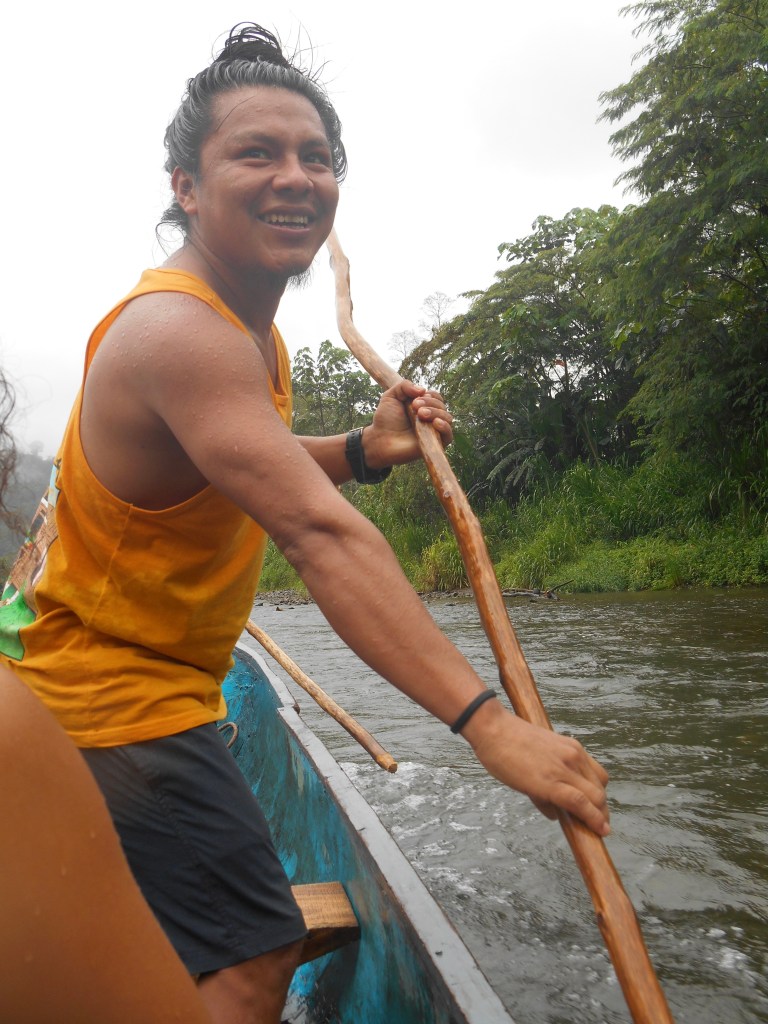
Mynor works as a tour guide and chocolate entrepreneur throughout Talamanca, but Yorkin is his childhood hometown. He is the sole reason we were able to conduct our research in Yorkin. Mynor opened his family’s home to us, and let us stay in the vacant casita next door to his siblings and their children during our 3-week stay. He helped us coordinate with community members to have interviews and spend time together, translated Bribri and Spanish, and got us to and from Yorkin. Kasho was integral to our time and fieldwork in Yorkin.
Additional Thanks
- Eliodoro “El Cañon”
- Kimberly
- Rigoberto
- Julio
- Yanina & Edgar
- Jacqueline
- Maryuli & Gardel
- Johana
- Vanesa
- Deysi
- Rolando
Special thanks to my advisors, Professor Jeffrey Bury and Professor Erendira Quintana Morales, faculty members in the Environmental Studies and Anthropology Department at UC Santa Cruz. Thank you both for your faith in me, and for helping me see this project through to the finish line.
References to Formal Literature
6. Cross-Chapter Paper 7: Tropical Forests. (n.d.). IPCC. CCP7.1, CCP7.2.1 https://www.ipcc.ch/report/ar6/wg2/chapter/ccp7/
7. Seidel, D., Wurster, S., Jenks, J., & Sati, H. (2024). Impact of climate change and natural disasters on fungal infections. Seidel, Danila Et Al. The Lancet Microbe, 5(6), 594–605 https://www.thelancet.com/journals/lanmic/article/PIIS2666-5247(24)00039-9/fulltext
8. Valencia, M. R., Davidson-Hunt, I., & Berkes, F. (2019). Social–ecological memory and responses to biodiversity change in a Bribri Community of Costa Rica. AMBIO, 48(12), 1470–1481. https://doi.org/10.1007/s13280-019-01176-z
9. Quesada-Román, A. (2022). Flood risk index development at the municipal level in Costa Rica: A methodological framework. Environmental Science & Policy, 133, 98–106. https://doi.org/10.1016/j.envsci.2022.03.012
10. E N V Team, Climate Change Climate Risk and Adaptation Country Profile, World Bank Data Catalog and Country Brief, CATHALAC, & CATHALAC. (2011). Climate Risk and Adaptation Country Profile Costa Rica. In Climate Risk and Adaptation Country Profile. https://climateknowledgeportal.worldbank.org/sites/default/files/2018-10/wb_gfdrr_climate_change_country_profile_for_CRI.pdf
11. Byskov, M. F., & Hyams, K. (2022). Epistemic injustice in Climate Adaptation. Ethical Theory and Moral Practice, 25(4), 613–634. https://doi.org/10.1007/s10677-022-10301-z
12. McGregor, D., Whitaker, S., & Sritharan, M. (2020). Indigenous environmental justice and sustainability. Current Opinion in Environmental Sustainability, 43, 35–40. https://doi.org/10.1016/j.cosust.2020.01.007
13. Kimmerer, R. W. (2017, June 12). Speaking of Nature. Orion Magazine. https://orionmagazine.org/article/speaking-of-nature/
14. Ipbes. (2019). Global assessment report on biodiversity and ecosystem services of the Intergovernmental Science-Policy Platform on Biodiversity and Ecosystem Services. In Zenodo (CERN European Organization for Nuclear Research). https://doi.org/10.5281/zenodo.6417333
15: World Bank Costa Rica Country Profile, 2021
16. Laenui, P. 2006. Processes of Decolonization. San Jose State University. https://sjsu.edu/people/marcos.pizarro/maestros/Laenui.pdf
18. Rodríguez, M., Davidson-Hunt, I. 2018. Resilience and the Dynamic Use of Biodiversity in a Bribri Community of Costa Rica. Hum Ecol 46, 923–931. https://doi.org/10.1007/s10745-018-0033-8
19. Wittman, H., Desmarais, A., Wiebe, N. 2010. Food Sovereignty: Reconnecting Food, Nature and Community. Fernwood Publishing. https://www.researchgate.net/publication/274455797_Food_Sovereignty_Reconnecting_Food_Nature_and_Community
 Phases and Faces of Change | Fases y caras de Cambio